August 28, 2018 •
Recent, Research, Specialist Journalism •
by Caroline Lees
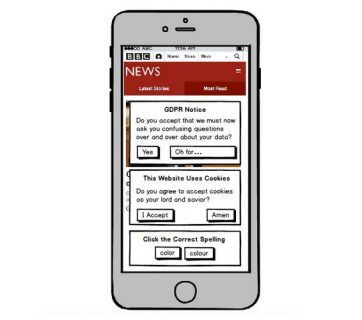
Has the GDPR forced European news outlets to cut down on intrusive third-party cookies on their websites? New research by the Reuters Institute for the Study of Journalism suggests that this might be the case....
Read article
May 8, 2018 •
Business Models, Media Economics, Recent, Specialist Journalism •
by Oscar Stanciulescu and Marian Popovici
Romania has seen a surge of independent media. These outlets want to act as a counterbalance to Romania’s increasingly biased media. But for many, it’s not easy to survive. Could crowdfunding be the solution?...
Read article
May 3, 2018 •
Comment, Media Economics, Recent, Specialist Journalism •
by Edward Percarpio
The date of the EU's General Data Protection Regulation coming into force is fast approaching, and its impacts are already being felt across various industries. But how will the new regulation affect publishers operating in Europe? Here is...
Read article
April 17, 2018 •
Business Models, Media Economics, Recent •
by Georgia Ertz
Native advertising is increasingly popular among advertisers and media companies. Yet, it is also a form of deception. Research shows that most readers do not recognise native advertising when they see it. Quality media, in particular,...
Read article
December 18, 2017 •
Digital News, Media Economics, Recent, Technology •
by Nicolas Becquet
Are French media companies addicted to Facebook? Last month, in an article for EJO, journalist Nicolas Becquet described how Facebook is paying French media organisations to produce original video content for Facebook news feeds. In some...
Read article
December 6, 2017 •
Business Models, Digital News, Media Economics, Research, Short stories •
by Felix Simon
Digital-born media companies face a gloomy future: while Google and Facebook see their ad businesses flourish, even the largest digital media companies are struggling to overcome challenges to their advertising-based business models....
Read article
November 20, 2017 •
Digital News, Media Economics •
by Nicolas Becquet
Facebook has won. French media organisations are now indeed addicts. They are, in fact, triply addicted – to expanding their audience for free, to using the social network’s production and distribution tools, and to earning additional...
Read article
October 10, 2017 •
Media Economics, Recent •
by Kaja Grzybowska
Internet publishers in Poland, who have traditionally based their business models on display advertising, are being challenged by a surge in the use of ad blockers. The country has the dubious privilege of being a world leader in ad...
Read article
June 21, 2017 •
Digital News, Media Economics, Recent •
by Kaja Grzybowska
Digital news providers in Poland are experimenting with video content to reach new audiences and increase advertising revenue. Some organisations have focused on producing very short videos, with subtitles, for distribution on social media...
Read article